
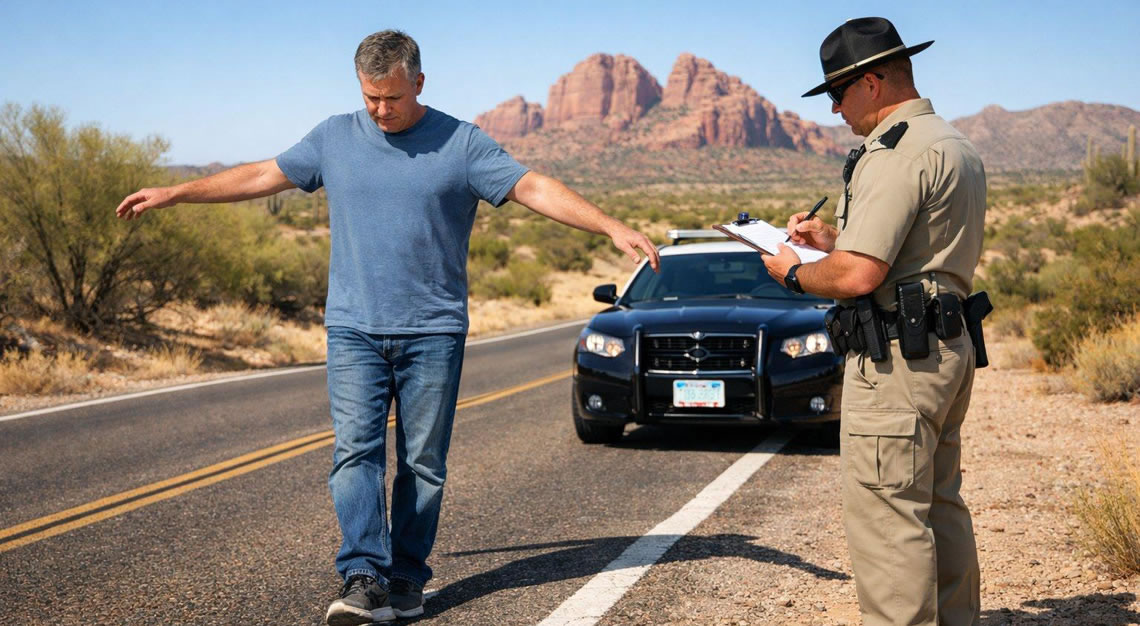
Field Sobriety Tests in Arizona: Are You Allowed to Refuse Them?
What Drivers Need to Know About Legal Requirements and Rights
Getting pulled over on suspicion of driving under the influence can be stressful and confusing. When an officer asks you to perform a field sobriety test, you might not know whether you have to do it or what could happen if you say no.
Understanding your legal rights during a DUI stop can help you make better decisions. Field sobriety tests are part of how officers investigate possible impaired driving, but the laws around these tests are different from other types of testing. Knowing what you are required to do and what choices you have can make a big difference in how you handle the situation.
What Is A Field Sobriety Test?
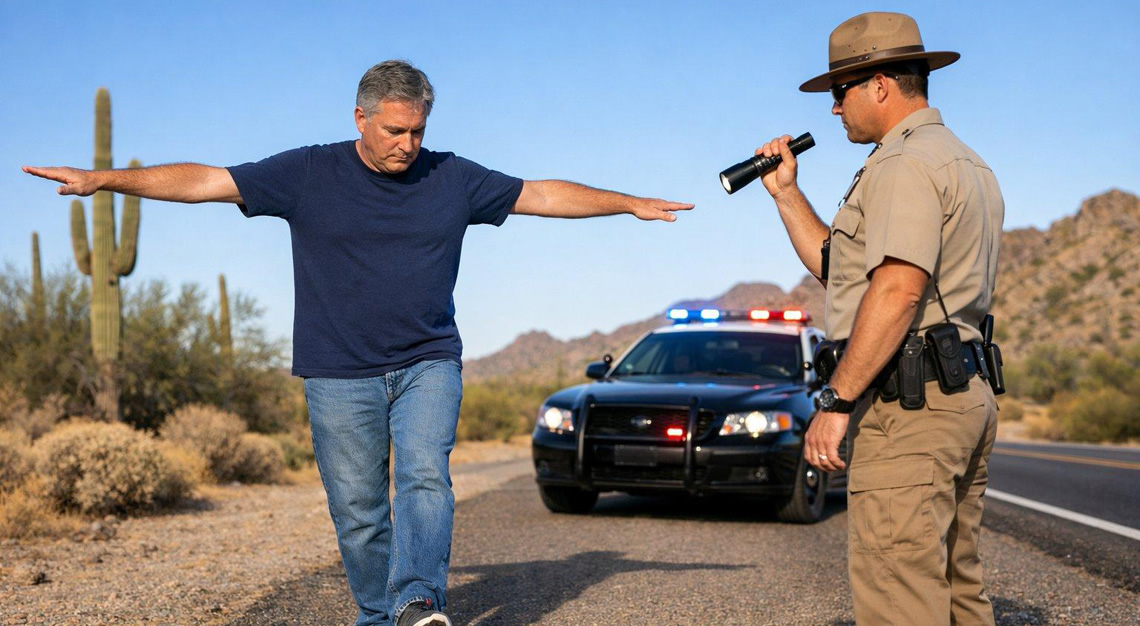
A field sobriety test (FST) is a physical or mental assessment that police officers use when they suspect a driver may be impaired by alcohol or drugs. Officers conduct these tests on the roadside during traffic stops. The purpose is to gather evidence about whether a person might be driving under the influence.
The National Highway Traffic Safety Administration developed three standardized field sobriety tests (SFSTs) that law enforcement officers use across the country. These standard field sobriety tests are the Horizontal Gaze Nystagmus, the Walk-and-Turn, and the One-Leg Stand. Each test looks for specific physical signs that might indicate impairment.
Horizontal Gaze Nystagmus (HGN)
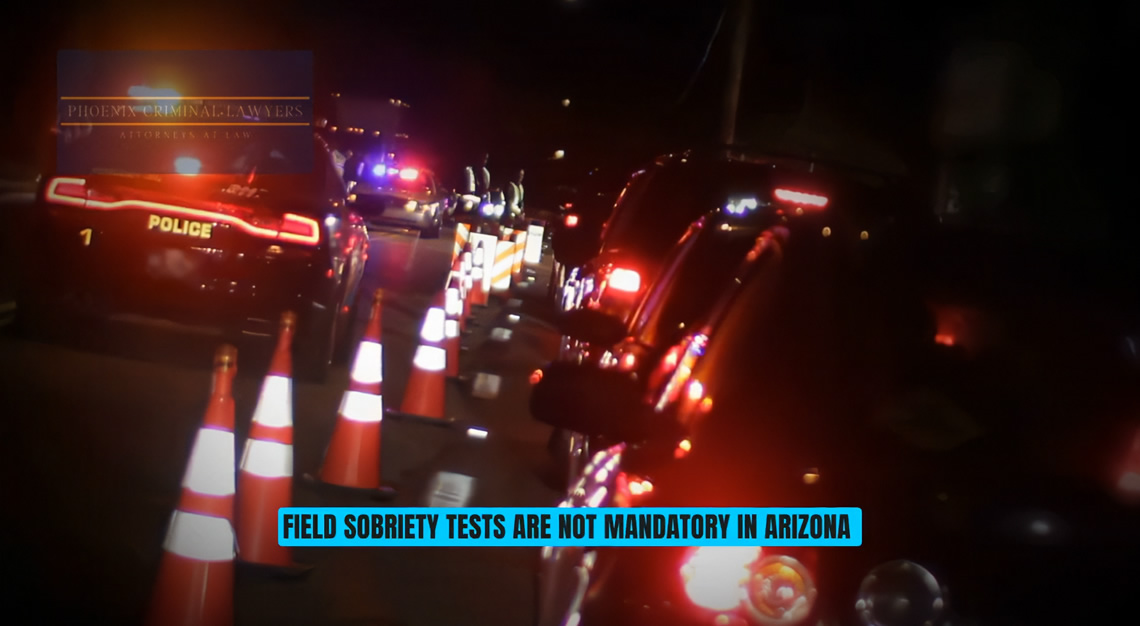
The HGN test examines how your eyes move when you track an object from side to side. Officers typically use a pen or small flashlight positioned about 12 to 15 inches from your face. They hold it slightly above your eye level and move it slowly across your field of vision.
During this test, the officer watches for involuntary jerking movements in your eyes. This jerking motion is called nystagmus. When you consume alcohol, your eyes may jerk more noticeably than normal. The officer also checks whether this jerking starts before your eyes reach a 45-degree angle. They observe both eyes separately to identify these clues.
Before starting the test, the officer should reduce visual distractions around you. This means turning you away from traffic lights, patrol car lights, and other bright or moving objects. They may ask you to remove your glasses if you wear them.
Walk-and-Turn
The Walk-and-Turn test requires you to perform a specific walking pattern. You must take nine heel-to-toe steps along a straight line, turn around using a particular method, and return with nine more heel-to-toe steps. The officer gives you detailed instructions before you begin.
Officers evaluate eight different indicators during this test:
- Whether you keep your balance during the instruction phase
- Starting before the officer finishes explaining the test
- Stopping mid-test to steady yourself
- Failing to touch heel to toe on each step
- Stepping off the imaginary or actual line
- Raising your arms away from your sides for balance
- Taking the wrong number of steps
- Executing the turn incorrectly
One-Leg Stand
The One-Leg Stand test measures your ability to balance on a single foot while performing a counting task. You must raise one foot approximately six inches off the ground and hold it there. While balancing, you count out loud starting with "one thousand one, one thousand two" and continue until the officer tells you to stop. This usually lasts about 30 seconds.
The officer watches for four specific signs during this test:
- Swaying while trying to stay balanced
- Lifting your arms away from your body
- Hopping on your standing foot
- Setting your raised foot back down
Other Tests
Some officers may use non-standard FSTs in addition to or instead of the three standardized tests. These might include reciting part of the alphabet, counting in specific patterns, or touching your finger to your nose. Courts generally view these tests as less reliable than the standard field sobriety tests.
Each of these tests has specific procedures that officers should follow. The effectiveness of these tests depends on proper administration and accurate observation by the officer conducting them.
Are Field Sobriety Tests Accurate?
Field sobriety tests are not perfectly reliable. The National Highway Traffic Safety Administration has studied how well these tests work in real situations.
The Horizontal Gaze Nystagmus test correctly identifies impaired drivers about 77 percent of the time. The Walk and Turn test shows around 79 percent accuracy when you display at least two warning signs. The One-Leg Stand test performs slightly better at 83 percent accuracy.
These numbers mean that these tests fail to correctly identify impairment in roughly one out of every five cases. Many factors can affect your performance on these tests even when you are sober. Your age, weight, physical condition, and nervousness can all impact how you perform. Weather conditions and uneven road surfaces also make these tests less reliable.
Do I Have To Consent To A Field Sobriety Test?
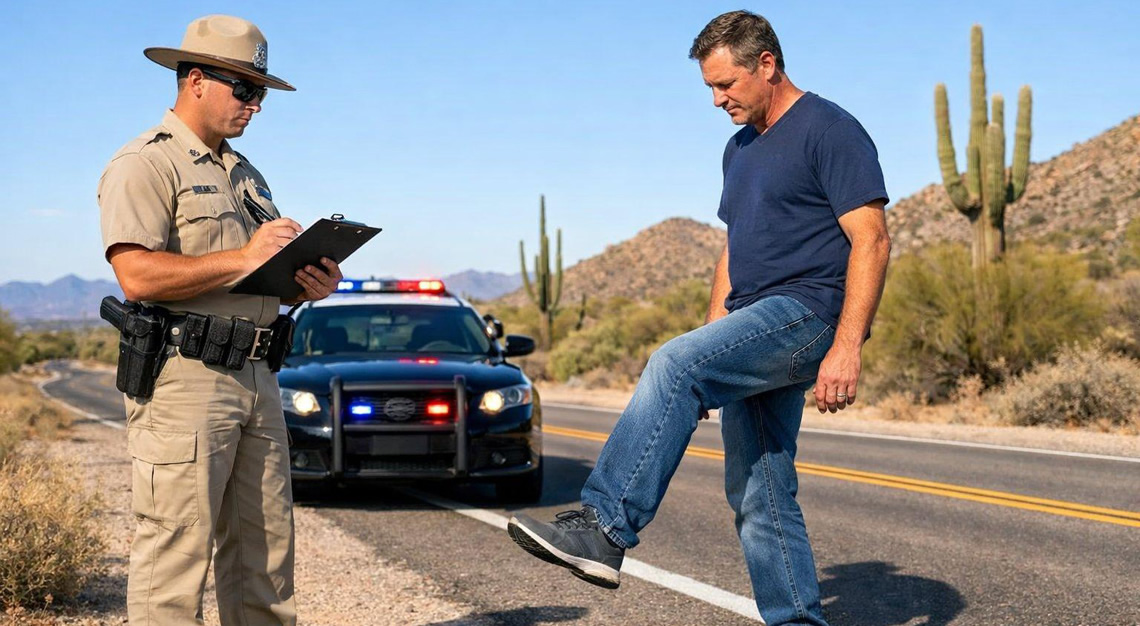
Field sobriety tests are not mandatory in Arizona. You have the right to decline these roadside physical tests when an officer requests them.
The implied consent law in Arizona applies only to chemical tests like blood or breath tests after an arrest. It does not require you to perform field sobriety tests before an arrest.
What you must provide:
- Your name
- Driver's license
- Proof of insurance
- Vehicle registration
You can politely decline to answer other questions by stating you have been advised not to respond. Remember that anything you say during a traffic stop can be used against you in court. Stay polite and respectful when exercising your rights.
What Happens If I Refuse To Take A Field Sobriety Test?
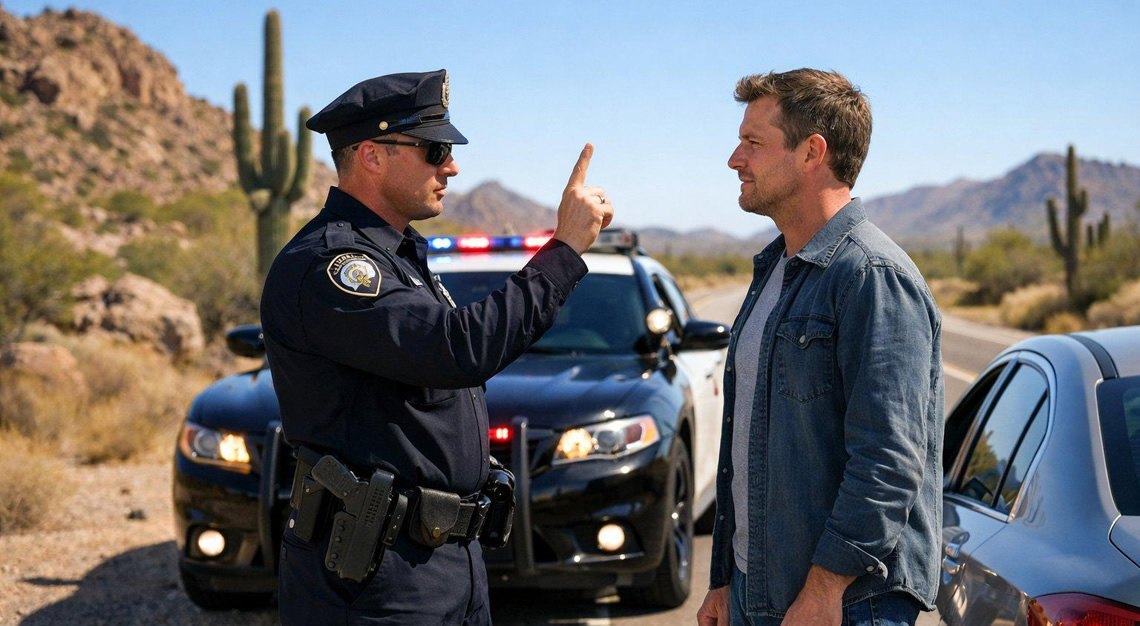
When you refuse to take a field sobriety test, your driver's license will not be suspended right away. This is different from what happens if you refuse a chemical test. The officer will likely move forward in one of two ways: they may get a search warrant or arrest you based on suspicion of DUI.
Immediate Consequences
The officer needs probable cause to arrest you. Your refusal alone may give them enough reason to believe you are driving under the influence. They will often use other signs like the smell of alcohol, slurred speech, or how you were driving.
Court Proceedings
Prosecutors can use your refusal against you in court. They will argue that you said no to the test because you knew you would fail it. This can hurt your defense even though refusing field sobriety test is your legal right.
Chemical Testing Requirements
After your refusal, you will likely face a request for chemical testing. These tests include:
- Breathalyzer
- Blood test
- Urine test
Arizona law requires you to take these tests after an arrest. If you refuse, you face serious penalties:
| Refusal Number |
License Suspension Period |
|
First refusal |
1 year |
|
Second refusal (within 84 months) |
2 years |
You have rights during this process. An officer cannot force you to take these tests without your consent or a valid search warrant.
What Are Some Possible Defenses If I Fail A Field Sobriety Test?
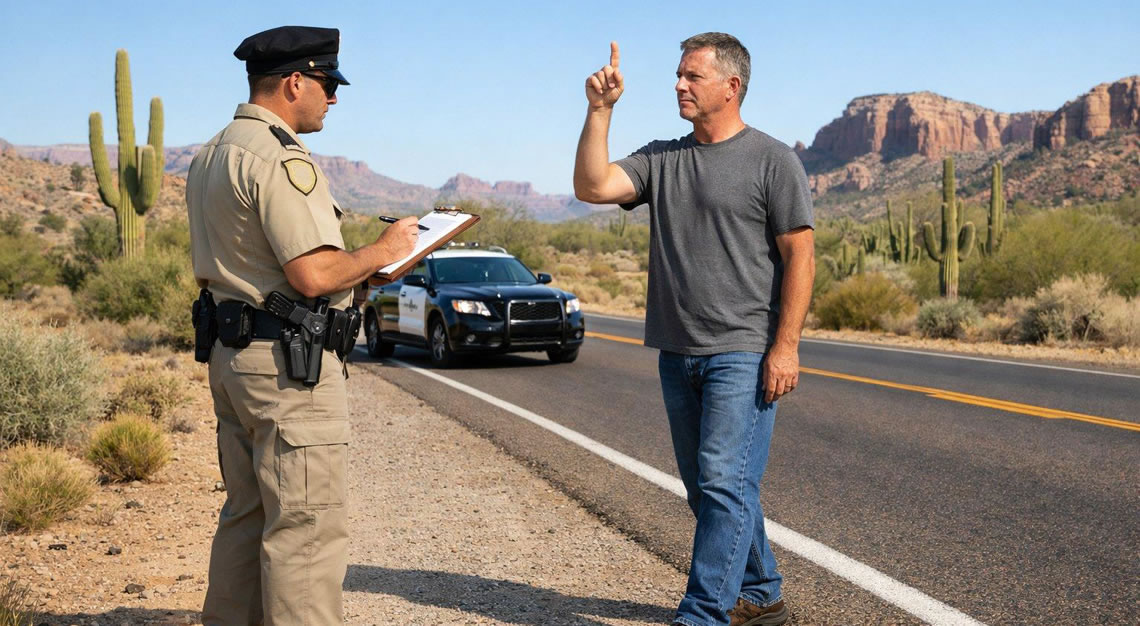
A failed test does not mean you will automatically be convicted. Several defenses can work in your favor when fighting charges.
Officers must follow exact procedures when giving these tests. If they skip steps or change the standard methods, your DUI defense attorney can argue the results are not valid. The way tests are given matters just as much as the outcome.
Physical limitations can affect how well you perform. Medical conditions, injuries, or disabilities may make it hard to complete certain movements. Your age or weight might also impact your balance and coordination during testing.
Environmental factors can strengthen your defense too. Bad weather, uneven ground, poor lighting, or distracting noise can all affect test performance. Wearing high heels or other uncomfortable shoes makes balance tests especially difficult.
Your DUI defense can also include:
- The officer lacked reasonable suspicion to stop you
- You were not actually driving the vehicle
- Your rights were not properly read to you
- The testing location was unsuitable
A skilled DUI defense attorney will examine every detail of your stop to build the strongest case possible.
Reach out to the criminal defense team at (602) 600-0447 to discuss your case. You can get legal advice that fits your specific circumstances and learn what steps to take next.


