

What Happens After You Are Arrested For a Crime in Arizona: A Complete Guide to the Criminal Justice Process
Getting arrested creates stress and confusion for most people. Understanding what comes next in the legal process helps you make better decisions and protect your rights during a difficult time.
The steps that follow an arrest in Arizona follow a specific legal structure. From the moment police take you into custody through your first court appearance, knowing what happens at each stage gives you the information you need to move forward.
The Arrest and Booking Process
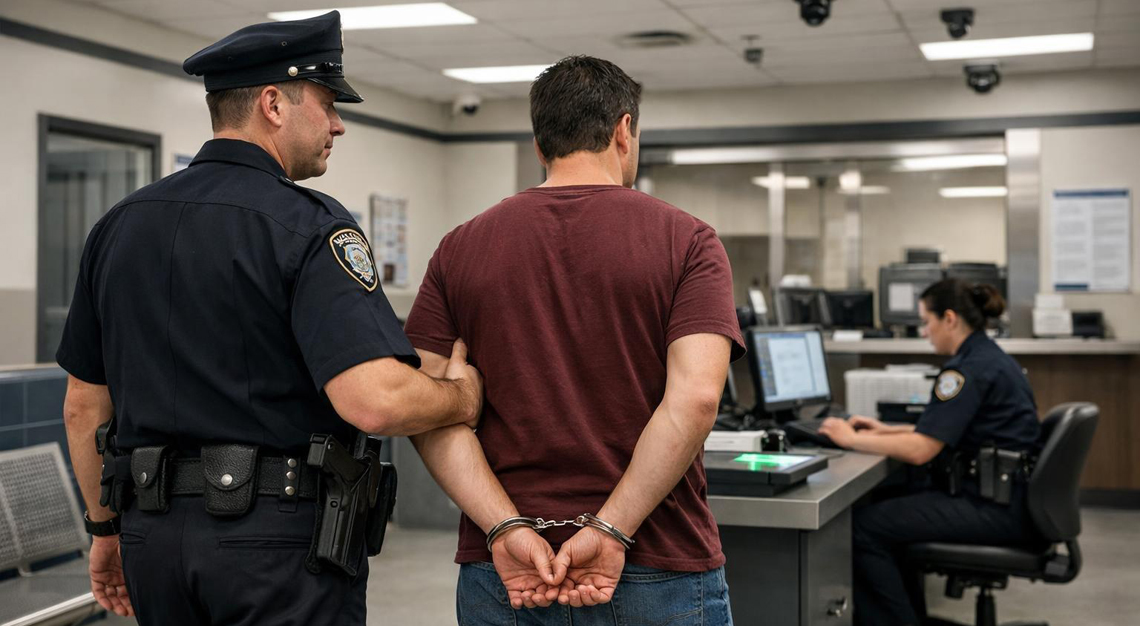
Once officers bring you to the police station, they will collect basic information about you. You'll need to provide your full legal name, birth date, and home address if they haven't already obtained these details.
Law enforcement officers can only place you under arrest when they have probable cause. This means they must reasonably believe a crime occurred and that you committed it. Sometimes arrests happen without proper probable cause, and officers may try to get you to make statements that support their case.
You have important rights during this time:
- You can remain silent and refuse to answer questions
- You can request to speak with a lawyer before any questioning
- Anything you say can be used as evidence against you in court
Officers must read you your Miranda Rights before they question you. Any statements you make without this warning might not be allowed in court later.
The booking procedure includes several steps:
- Taking your photograph for booking records
- Recording your fingerprints
- Collecting your personal items for storage
- Documenting your physical characteristics
The entire booking process typically takes between four and eight hours before you appear in front of a judge.
First Court Hearing and Release Terms
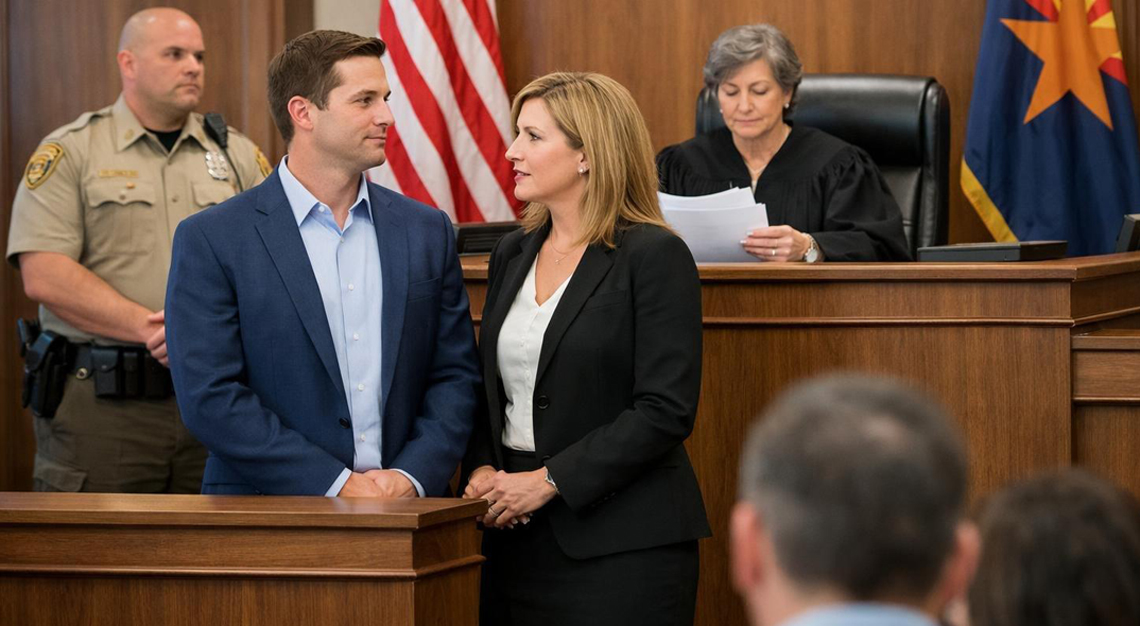
Arizona law requires that your first court hearing happen within 24 hours after your arrest. This hearing marks your official entry into the criminal court process as a defendant.
What Takes Place at Your First Hearing
The judge will handle several important tasks during this hearing. You will hear the formal charges against you. The judge will explain your right to legal representation and will assign a public defender if you qualify for one. You will also learn when and where your next court date will occur.

Understanding Your Release Options
The judge will decide how you will be released from custody. Several options exist depending on your situation and the charges you face.
Your release options may include:
- Release on your own promise to return
- Release with supervision from pretrial services
- Release with electronic monitoring through a GPS device
- Release to the care of another responsible person
- Release after posting a set bond amount
- No release option (held without bond)
When You Face Minor Charges
Less serious charges like infractions often result in immediate release. You will sign a personal promise to appear at future court dates. Missing a required court date will result in serious problems. A warrant will be issued for your arrest. You may face additional fines and extended jail time.
When You Face Serious Charges
Felony charges typically require you to post bond before release. The judge sets the bond amount based on various factors. If you cannot post bond, you will remain in jail. Some defendants are held without any bond option if they pose a safety risk to the community.
Probable Cause Requirements
If you remain in custody without bond, the court must find probable cause within ten days. This happens through either a grand jury indictment or a preliminary hearing. If you are out of custody, these proceedings must occur within twenty days of your first hearing.
How to Prepare for Your Hearing
Dress in appropriate courtroom attire. Arrive on time without exception. Be ready to answer questions from your attorney and ask any questions you need answered. Never discuss your case details with the judge or anyone else in court if you do not have an attorney present. Any statements you make can be used as evidence against you.
Timeline for Your Case
Your case will move through the court system over several months. The exact timeline depends on the severity of your charges. Arizona law guarantees your right to a speedy trial. If you remain in custody, trial must begin within 150 days of your arraignment. If you are out of custody, the deadline extends to 180 days. Complex cases have a 270-day limit. Capital cases that involve the death penalty must go to trial within 24 months after the state files its notice.
Victim Participation
Crime victims have the right to submit a Victim Impact Statement at your first hearing and at sentencing. This statement describes how the crime affected them and their family. Victims can recommend what punishment they believe you should receive. Judges consider these statements when making decisions about your release and eventual sentencing.
When Charges Are Not Filed
The prosecutor's office may decide not to move forward with your case. This means the charges mentioned at your first hearing were not formally accepted. Your case might return to the investigating agency for more information or different charges may be considered.
Next Steps and Changes
Your next court date will be scheduled before you leave. This usually takes place in a Justice Court or Superior Court. Your release conditions can change at any future court date. They can also change if someone files a motion requesting different terms.
Probable Cause Determinations
In Arizona felony cases, the court must establish probable cause before your case moves forward. This happens through one of two paths: a preliminary hearing or a grand jury indictment.
Preliminary Hearings
A preliminary hearing takes place before a court commissioner. The prosecution presents evidence to show that a crime occurred and that you likely committed it. This evidence typically includes testimony from police officers, official reports, and witnesses. Your defense attorney can attend this hearing and has the right to question witnesses and submit evidence on your behalf.
The commissioner reviews all evidence to determine two things:
- Whether the charged crime probably happened
- Whether you were probably the person who committed it
If the evidence falls short on either point, your case gets dismissed. If the commissioner finds the evidence sufficient, your case advances to an initial pretrial conference in superior court.
Grand Jury Process
The prosecution may choose to present your case to a grand jury instead. This process happens behind closed doors without your attorney present. The grand jury reviews evidence from prosecution witnesses and decides if probable cause exists.
You will not have a preliminary hearing if a grand jury has already issued an indictment. Once the grand jury finds probable cause and returns an indictment, your next court appearance will be an arraignment in superior court.
Talk to Your Arizona Criminal Defense Attorney About Plea Agreements

Working with a criminal defense attorney before making any decisions about a plea agreement protects your rights. Your lawyer needs to walk you through every detail of what you're agreeing to and what you're giving up. This includes your right to have a trial, question witnesses, and present evidence in your defense.
What You Give Up in a Plea Agreement
When you accept a plea agreement, you take responsibility for charges in exchange for a potentially lighter sentence than you might receive if you lose at trial.
The trade-off involves giving up several important rights:
- Your right to a preliminary hearing
- Your right to a jury trial
- Your ability to cross-examine witnesses
- Your chance to testify on your own behalf
- Your opportunity to present your own defense
- Potentially your right to appeal
Your Attorney's Role Before You Sign
Your defense attorney must review all aspects of your case before you enter any agreement. They should show you the evidence against you and explain both the strong and weak points of your case. You need to know what prison time you could face if you lose at trial versus what the plea agreement offers.
Sometimes negotiating early makes sense, especially if you know what happened and the facts work against you. Other times, your case might have problems that could lead to a better outcome if challenged. Your attorney can spot these issues and advise you accordingly.
You Make the Final Decision
Your lawyer develops strategy and handles legal procedures, but you control the major choices. You decide whether to accept a plea agreement or go to trial. You choose whether to testify in your own defense. If convicted, you pick whether to appeal or file for post-conviction relief to change your sentence.
Sentencing typically happens about thirty days after you enter a plea agreement. Before that date arrives, make sure you understand everything you're agreeing to. Ask your attorney to explain anything that seems unclear.
The Judge Has Final Say
Even after you and the prosecutor agree to terms, the judge reviews the agreement. The judge can reject the terms if they seem inappropriate. This means the agreement isn't final until the court accepts it.
Never waive your preliminary hearing or accept any agreement without legal guidance. The consequences affect your future, and you deserve to make informed choices.
Moving Forward: Court Proceedings and Resolution

Reaching a Resolution: Trial or Agreement Options
After your initial court appearances, your case moves into a critical phase. Your lawyer will receive all evidence from the prosecution during a process called discovery. This includes police reports, video footage, witness statements, and any physical evidence.
Your attorney examines this material to find weaknesses in the prosecution's case. They may file motions to challenge evidence that was collected illegally or statements taken without proper warnings.
Key pretrial activities include:
- Reviewing all evidence and identifying defense strategies
- Filing motions to suppress unlawfully obtained evidence
- Negotiating with prosecutors about possible agreements
Many cases are resolved through negotiations rather than trial. Your lawyer can discuss options with the prosecutor to potentially reduce charges or penalties. However, you have no automatic right to such an agreement.
If you choose to go to trial, the state must prove your guilt beyond a reasonable doubt. This is the highest standard in the legal system. You don't need to prove anything or testify. Your right to remain silent protects you throughout the trial.
Your attorney will present your defense by calling witnesses and introducing evidence. They will also question the prosecution's witnesses to challenge their testimony.
Trial considerations:
| Factor |
Details |
|
Burden of proof |
State must prove guilt beyond reasonable doubt |
|
Your rights |
Right to remain silent; presumed innocent |
|
Jury size |
Eight or twelve jurors depending on potential penalties |
Anything you said to police, friends, or family can become evidence. These people may be called to testify against you.
After Conviction: Penalties and Legal Options
When a conviction occurs through trial or agreement, the judge will determine your punishment. Your lawyer presents arguments for the lightest possible outcome. This might include probation instead of prison or a shorter sentence.
Probation conditions vary but can include jail time of up to one year along with other requirements.
You have the right to challenge your conviction after sentencing. Appeals and post-conviction filings allow you to raise legal errors that affected your case. These procedures have strict time limits that must be followed exactly.
Post-conviction options:
Appealing the conviction based on legal mistakes Filing for relief when new evidence emerges Requesting sentence modifications in certain situations
Quick action is essential to preserve these rights.
Reach out to the criminal defense team at (602) 600-0447 to discuss your case. You can get legal advice that fits your specific circumstances and learn what steps to take next.


