
Are Private Gun Sales Legal in Arizona? Understanding State Firearms Transfer Laws
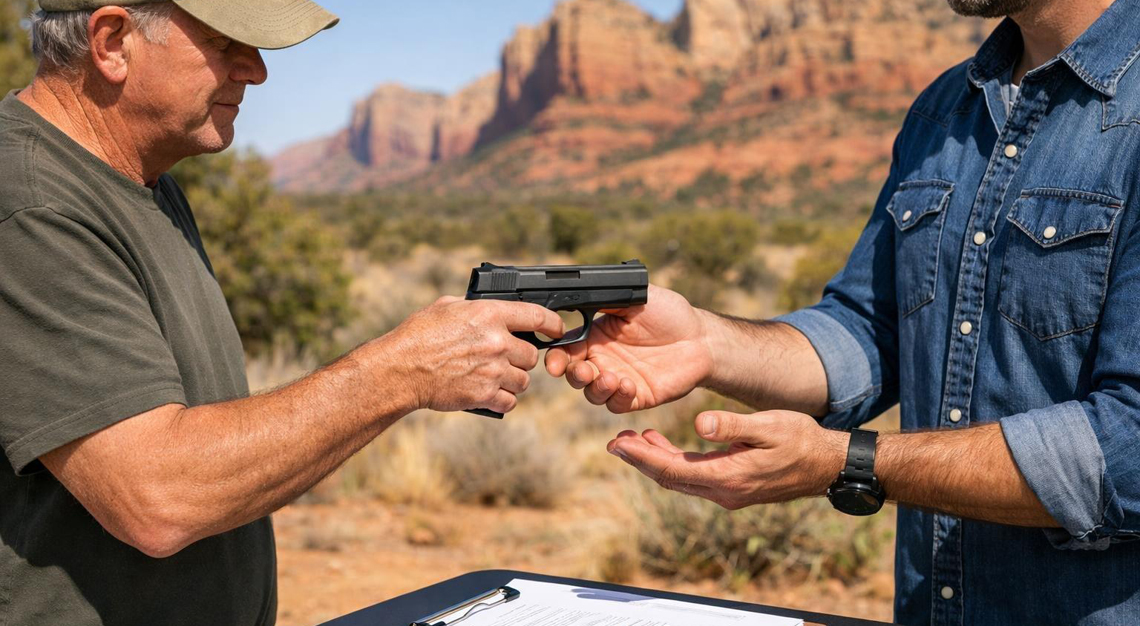
Arizona law allows residents to sell firearms privately to other residents without involving a licensed dealer in most cases. You can transfer a gun to a friend, family member, or neighbor without going through a background check under state law. This reflects Arizona's approach to Second Amendment rights, but it does not mean all private sales are legal.
Both state and federal laws prohibit selling or transferring firearms to certain people, and breaking these rules can lead to serious criminal charges. You need to understand when background checks are required, which transfers are allowed, and what legal risks you might face. This guide explains the rules for private gun sales in Arizona and helps you navigate the legal requirements that apply to these transactions.
Key Takeaway

You can sell firearms directly to other Arizona residents without going through a dealer. The state does not require background checks for these private transactions.
Important legal restrictions include:
- You cannot sell to anyone you know or should know is legally prohibited from owning guns
- Licensed dealers must still run background checks, but this does not apply to occasional private sellers
- Prohibited buyers include convicted felons, certain domestic violence offenders, and people under qualifying protection orders
Arizona has not adopted universal background check laws as of 2026. You have no legal obligation to verify a buyer through the federal system when conducting private sales.

What this means for you:
Private sales remain legal and accessible. You maintain responsibility for avoiding sales to prohibited persons. Federal and state restrictions on gun ownership still apply to every transaction.
If you have questions about a specific sale, contact a criminal defense attorney. They can provide guidance based on your exact circumstances and help you stay within legal boundaries.
Overview of Arizona Private Gun Sale Laws
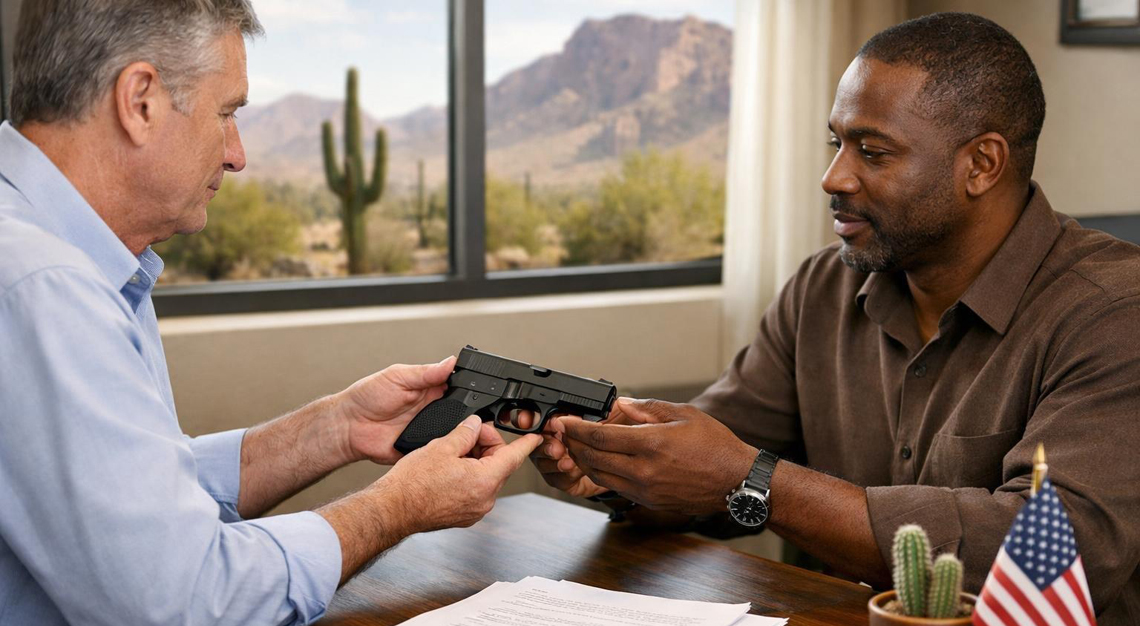
Arizona permits residents to sell firearms directly to other residents without using a licensed dealer. You can sell a handgun to a friend, give a rifle to a relative, or transfer a shotgun to someone you know. These transactions occur daily across the state.
Common private transfers include:
- Sales between friends or acquaintances
- Gifts to family members
- Transfers to neighbors or co-workers
You do not need to involve a gun shop or government office for these sales. Arizona recognizes the right of residents to buy and sell firearms among themselves.
However, arizona gun laws still regulate who can own guns. You cannot legally sell or give a firearm to someone who is banned from possessing one. Federal regulations also apply to every sale, whether private or through a dealer.
Key restrictions you must follow:
- Buyers must be legally allowed to own guns
- You cannot transfer firearms to prohibited persons
- Both state and federal laws remain in effect
Arizona's permitless carry status makes gun ownership accessible, but it does not eliminate all rules. The state draws a clear line between lawful gun owners and those prohibited from possession.
Your responsibility as a seller is to avoid transferring firearms to anyone who cannot legally own them. This requirement exists even though private sales do not require background checks. Understanding when a sale is lawful protects you from criminal liability.
Are Private Gun Sales Legal in Arizona?
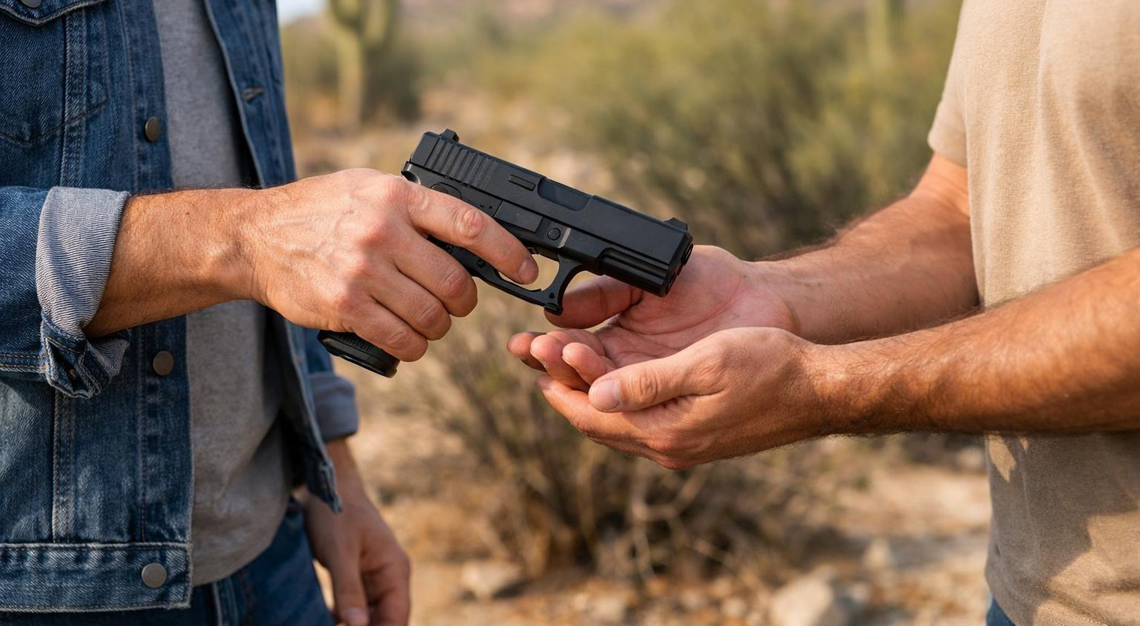
Private gun sales between Arizona residents are legal. You can sell or give a firearm to another person without going through a licensed dealer, as long as both you and the buyer are legally allowed to own guns.
A private sale happens when you sell or give away a gun from your personal collection. This is different from running a business where you regularly buy and sell firearms, which requires a federal license. You might be making a private sale if you're selling a gun you inherited, trading with a friend, or getting rid of firearms you no longer use.
Key points about Arizona private sales:
- No state law requires you to use a licensed dealer for private transfers
- No background checks are required by state law for private transactions
- You must complete the sale face-to-face within Arizona
- Both people must be Arizona residents
Arizona is one of about 41 states that don't require background checks for private gun sales. About 18 states and Washington D.C. have different rules that require checks for all sales.
You cannot sell to someone from another state in a private sale. Federal law requires interstate transfers to go through a licensed dealer in the buyer's home state. Shipping a gun across state lines to a private buyer without using a licensed dealer breaks federal law.
Remember that legal private sales don't override location restrictions. You still cannot possess firearms in schools, certain government buildings, and federal facilities. These rules apply no matter how you got the gun.
Do Private Gun Sales in Arizona Require Background Checks?
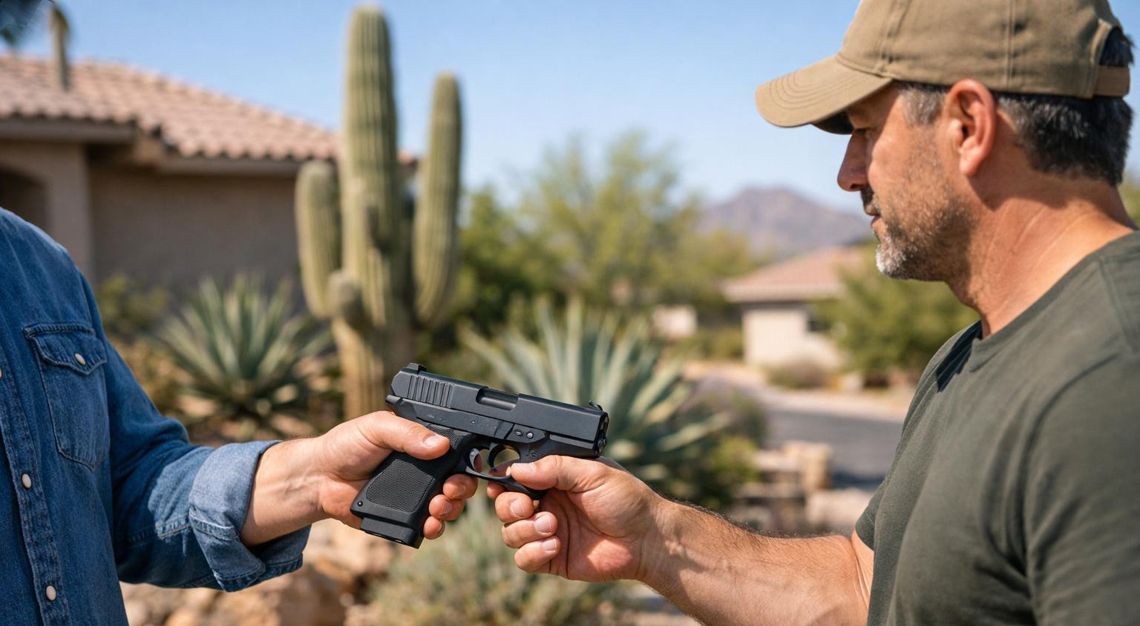
Arizona law does not require background checks when you sell a firearm privately to another Arizona resident. This means you can complete the transaction without involving federal agencies or running the buyer through any database.
Licensed Dealers vs. Private Sellers
When you buy from a federally licensed firearms dealer, that dealer must run you through the FBI's National Instant Criminal Background Check System (NICS). This federal requirement comes from the Brady Handgun Violence Prevention Act of 1993. The dealer cannot transfer the firearm to you until completing this check.
If you sell your personal firearm to another Arizona resident, you face no such requirement. You are not legally obligated to verify the buyer's eligibility or contact any law enforcement agency.
How NICS Works
The NICS system searches three separate databases when processing a background check:
- Interstate Identification Index
- National Crime Information Center
- NICS Indices
These databases contain criminal records, mental health information, and civil orders that could affect someone's ability to purchase firearms. The system was designed to prevent prohibited individuals from obtaining guns. Most checks complete immediately, resulting in one of three outcomes: Proceed, Denied, or Delayed for further investigation.
Your Options as a Private Seller
While Arizona law does not require you to conduct background checks, you can choose to use a licensed dealer to process your private sale. The dealer will run the buyer through NICS and charge you a fee, typically between $20 and $50. This voluntary step gives some sellers confidence they are not transferring a gun to someone who cannot legally possess it.
You should know that other states have passed universal background check laws requiring all firearm transfers to go through licensed dealers. Arizona has not adopted such laws as of 2026. Your private sales remain exempt from mandatory background check requirements under state law.
Concealed Carry Permits
In Arizona, if you hold a valid concealed carry permit, you may be exempt from the NICS check when purchasing from a licensed dealer. This exemption applies because the permit itself required a background check.
Federal Law: Prohibited Buyers and Private Arizona Sales

Federal law applies to every gun sale in Arizona, including private transactions between residents. You must follow these rules even when state law does not require a background check.
Under federal law, specific categories of people cannot legally own firearms. You cannot sell a gun to anyone in these groups, regardless of whether you run a background check or not.
Federal law prohibits gun ownership for:
- People convicted of felonies
- Fugitives from justice
- Those who use or are addicted to controlled substances
- People declared mentally defective or committed to mental institutions
- Illegal aliens and some nonimmigrant visa holders
- People dishonorably discharged from the military
- People who have renounced their U.S. citizenship
- People subject to certain domestic violence restraining orders
- People convicted of misdemeanor domestic violence crimes
You break federal law if you know or have reasonable cause to believe your buyer falls into any prohibited category. You cannot claim ignorance if warning signs exist.
You might have reason to know if:
- The buyer mentions recent legal problems
- You personally know about their criminal history
- The buyer asks you to skip documentation
- The buyer displays obvious red flags during conversation
The consequences are severe. Knowingly selling a firearm to a prohibited person can result in federal felony charges. You could face up to 10 years in federal prison.
The federal government enforces these laws through criminal prosecution. Federal agencies track denials and enforcement actions. You are responsible for ensuring your buyer is legally eligible to own firearms, even in a private sale.
If you have concerns about a potential buyer's eligibility, seek legal guidance before completing the transaction.
Arizona Law: Key Rules and Risks for Private Sellers

Arizona law allows you to sell firearms privately without going through a dealer. However, you still face serious legal responsibilities when completing any gun transfer.
Who Cannot Own Firearms
State law defines specific categories of people who cannot legally possess guns. You cannot knowingly sell to anyone who falls into these groups:
- Felons whose civil rights remain unreturned
- People declared incompetent for trial or found not guilty by reason of insanity
- Individuals currently serving imprisonment, probation, parole, or community supervision for qualifying crimes
- Undocumented immigrants or nonimmigrant aliens
- People a court has determined pose a danger to themselves or others
Your Legal Obligations
Selling or transferring a firearm to someone in these prohibited categories is a criminal offense. This law applies equally to private sellers and licensed dealers. The key word is "knowingly"—if you are aware or should reasonably know the buyer cannot legally own guns, you break the law by completing the sale.
What Arizona Does Not Require
The state does not mandate that you check identification or maintain written records for private sales. Despite this, many sellers choose to verify basic information anyway. Licensed dealers must see valid government photo identification showing the buyer's name, birth date, and address. Using this same standard for private sales helps confirm the person is an Arizona resident and meets minimum age requirements.
Smart Steps to Protect Yourself
You can reduce your legal exposure through simple precautions:
Action |
Benefit |
|
Meet in public places |
Increases personal safety |
|
Ask about legal eligibility |
Helps avoid prohibited buyers |
|
Request to see identification |
Confirms age and residency |
|
Use an FFL for uncertain sales |
Adds professional screening |
|
Trust your instincts |
Prevents questionable transactions |
If a buyer refuses to answer basic questions or show identification, walk away from the deal. You can also choose to process any transfer through a licensed dealer if you have concerns about the buyer's status.
If authorities contact you about a past firearm sale, speak with an attorney before answering questions.
Special Situations: Gun Shows, Online Listings, and Interstate Transfers
Arizona law treats gun shows the same as any other location for firearm sales. Licensed dealers at gun shows must complete Form 4473 and run background checks on all buyers. Private sellers at gun shows face no state requirement to use the federal background check system. This practice is often referred to as the "gun show loophole," though the term simply describes the existing difference between licensed and private sellers under federal law.
When you use online listings to connect with buyers or sellers, you're using a tool to arrange a face-to-face transaction. Classified ads, forums, and firearm-specific websites help people find each other. Once you meet in person within Arizona, the same private sale rules apply as any other transaction.
Interstate transfers operate under different rules entirely.
Federal law requires involvement of a licensed dealer in the buyer's home state when you transfer a firearm across state lines. Arizona law doesn't override these federal regulations. Ignoring interstate transfer requirements can lead to federal charges for illegal firearm trafficking.
You should know that shipping companies and online platforms often have their own policies requiring licensed dealer involvement. These policies exist regardless of what state law allows. Breaking platform rules can result in account closures, and improper shipping creates potential criminal liability.
If you sell firearms frequently or plan out-of-state transfers, you need to understand federal licensing requirements. The ATF watches for individuals who sell guns regularly for profit without obtaining a federal firearms license. This activity may qualify as being "engaged in the business" of dealing firearms, which requires a license. The Bipartisan Safer Communities Act adjusted this definition, but private sales between individuals remain legal under both federal and Arizona law when conducted properly.
Steps Arizona Buyers and Sellers Should Take to Stay Protected
Private sellers can lower their legal exposure by following a basic set of precautions. Start by asking to see a valid Arizona driver's license or state ID to confirm the buyer lives in Arizona. Check that the buyer is at least 18 years old based on their identification.
You should directly ask the buyer if they are legally allowed to own a firearm. This simple question creates a record of due diligence. If anything about the transaction feels off, walk away. Your instincts matter when it comes to legal risk.
Quick Checklist for Private Sellers:
- Verify Arizona residency with current ID
- Confirm buyer is 18 or older
- Ask about legal eligibility to own firearms
- Walk away if concerns arise
- Use a licensed dealer if uncertain
If you have doubts about a buyer's background or eligibility, consider completing the transfer through a licensed dealer. This adds a layer of protection for you as the seller.
As a buyer in a private sale, you must be legally eligible to own a firearm even if no background check occurs. Providing false information about your eligibility creates criminal liability. If you are unsure about your legal status due to past arrests or convictions, speak with an attorney before purchasing any firearms.
Illegal transfers carry serious penalties for both parties. You could face felony charges, permanent loss of gun ownership rights, employment barriers, and problems getting professional licenses.
Arizona does not require written sale records, but keeping basic notes is smart. Many sellers write down the date, firearm description, and buyer's name and contact details. This simple documentation protects you if questions come up later.
Certain situations need individual legal analysis rather than general guidance. Questions about past convictions, regaining rights after a felony, or active court orders against you require professional review. Each case has unique facts that affect your legal standing.
Gun Safety and Responsibility in Private Sales
When you sell a firearm privately, you take on important duties that affect your community's well-being. Federal law does not make you run background checks as a private seller. This creates a risk that guns could end up with people who cannot legally own them.
Key responsibilities include:
- Verifying the buyer's identity and age
- Confirming the buyer can legally possess firearms
- Keeping records of the transaction
- Following all applicable state laws
Different states have different rules for private gun sales. Some states require you to conduct background checks on all handgun sales, whether you are a licensed dealer or not. Other states only require checks when licensed dealers make the sale. This means private transactions may have fewer requirements.
The absence of required background checks in many areas creates problems. Guns sold privately can become part of illegal trafficking networks. Research shows that states with stronger firearm sale laws have fewer gun-related deaths.
You should consider running a background check even when it is not required. This extra step helps ensure your buyer can legally own the firearm. It also protects you from potential legal issues if the gun is later used in a crime.
By taking these precautions, you help prevent firearms from reaching prohibited individuals. Your careful approach to private sales contributes to reducing gun violence in your area.
Common Questions About Private Firearm Sales and Background Checks in Arizona
Is it legal to privately sell a firearm to someone under 21?
Arizona law permits adults who are 18 years old or older to possess most firearms, including handguns. Federal law restricts licensed dealers from selling handguns to anyone under 21. Private sales follow different rules.
When you sell a handgun privately to someone between 18 and 20 years old, you are not bound by the same federal dealer restriction. The transaction can be legal if the buyer meets all other requirements.
You still cannot sell to any prohibited person regardless of their age. If the 18-year-old buyer has a criminal record or another disqualifying factor, the sale becomes illegal.
Sellers who plan to transfer firearms to younger buyers should speak with an attorney first. The legal risks of an unintentional violation may not be worth completing the sale.
Do you need permits or registration for privately purchased firearms?
Arizona does not require a state purchase permit for guns. You do not need a firearms owner ID card. Most firearms acquired through private sales or dealers do not require registration.
No universal registry of gun ownership exists in Arizona. Federal law requires licensed dealers to keep records of their sales. These records are not compiled into a statewide database that law enforcement agencies can access freely.
National Firearms Act items follow different rules. Suppressors, short-barreled rifles, and firearms classified under the NFA always need federal paperwork. You must obtain tax stamps and complete ATF review for these items whether you buy from a dealer or private party.
What happens if you discover you sold to a prohibited person?
Your criminal liability usually depends on what you knew when you completed the transfer. Later discoveries typically do not create retroactive liability if you acted in good faith.
If you had no reason to believe the buyer was prohibited at the time of sale, learning new information afterward generally does not make you criminally responsible. The law focuses on your knowledge and intent during the actual transaction.
You should speak to a defense attorney before contacting law enforcement if you learn a buyer was prohibited or used the firearm in a crime. Well-intentioned cooperation can sometimes create legal complications. Anything you say to police can be used against you.
Can you conduct your own background check on a potential buyer?
Private individuals cannot access the National Instant Criminal Background Check System directly. Only law enforcement agencies and federally licensed firearms dealers can use NICS.
You can complete the transfer through a licensed dealer if you want a background check. The dealer will run the standard NICS check and verify the buyer's eligibility. Many Arizona dealers offer this service for a reasonable fee.
Do not attempt to obtain criminal or mental health records through unauthorized channels. Accessing restricted databases without proper authorization creates separate legal problems. You should either decline the sale or use a licensed dealer if you have concerns about a buyer.
Does constitutional carry affect private sale regulations?
Arizona's constitutional carry law allows adults to carry concealed firearms without obtaining a permit. This law relates to how you can carry firearms in public. It does not change the rules for private sales or background checks.
Constitutional carry does not make transfers to prohibited persons legal. It does not override federal background check requirements when licensed dealers sell firearms. The law focuses on carry rights rather than transfer procedures.
Concealed carry permits remain available for those who want them. Many people obtain permits for reciprocity when traveling to other states. You do not need a permit for most lawful firearm possession in Arizona.
When to Reach Out to Phoenix Criminal Lawyer for Legal Guidance
Phoenix Criminal Lawyer's criminal defense attorneys help Arizona residents understand firearm ownership rules, prohibited possessor status, and private gun transfer laws. Seeking legal counsel before completing a transaction can help you avoid legal trouble. Getting help after law enforcement starts asking questions can safeguard your legal protections.
You should consider scheduling a consultation if you:
- Hold a felony conviction or domestic violence conviction on your record
- Are currently subject to a protective order or restraining order
- Have court records related to mental health determinations
- Want to regularly buy and sell firearms as a business activity
- Need clarification about whether your gun ownership rights were restored
- Have been approached by police regarding a previous firearm sale
An attorney can examine your background, court documents, and restoration status to confirm whether you can legally own, purchase, or sell guns in Arizona. This personalized assessment offers specific answers that general guidance cannot provide.
Call the Phoenix Criminal Lawyer criminal defense team at (602) 600-0447 to arrange a private consultation if you have questions about a planned transaction or are facing an investigation. Getting legal advice at the right time can help you avoid unintentional violations, minimize legal risks, and preserve your rights under Arizona and federal law. Contact the office to talk through your circumstances.


