

What Happens if You Get Arrested for DUI in Arizona? Arizona DUI Arrests: Understanding Your Rights and Legal Options
Arizona law treats driving with a blood alcohol concentration of 0.08 or above as a class 1 misdemeanor. You face up to six months in jail and fines reaching $2,500 if convicted.
The arrest process typically begins when an officer observes signs of impaired driving. The officer will request your license, insurance, and vehicle registration during the traffic stop.

Testing Procedures
You may be asked to complete field sobriety tests or take a preliminary breath test. Refusing both tests results in arrest, though this does not equal an automatic conviction.
Arizona's implied consent laws require you to submit to chemical testing after arrest. Refusal carries serious penalties:
- First refusal: 12-month license suspension
- Second refusal: 24-month license suspension
These suspensions apply whether or not you receive a DUI conviction. Many arrests in Maricopa County follow this same process. Officers must establish reasonable suspicion before making a DUI arrest, and the legal proceedings involve multiple steps from initial stop through potential court appearances.
What Occurs When Law Enforcement Stops You for DUI

Law enforcement agencies across Arizona conduct a large number of traffic stops each year. Many of these stops result in DUI arrests when drivers show signs of impairment.
When you operate a vehicle with a blood alcohol concentration of 0.08 or higher, you face serious legal trouble. Arizona law treats this offense as a class 1 misdemeanor. The penalties can include jail time and financial consequences that affect your life for months or years.
Potential penalties include:
- Up to 6 months in jail
- Fines reaching $2,500
- License suspension
- Additional consequences based on specific circumstances
The Arizona Department of Public Safety and local police departments work together to protect public safety. If your case involves aggravating factors like causing an accident that injures someone, you could face more severe charges beyond a standard DUI.
You should contact a criminal defense attorney right away after an arrest. An attorney can explain your legal options and help you understand what comes next in the court process.
What Happens Right After a DUI Arrest

When Police First Notice You
A DUI arrest usually starts when an officer pulls you over because they suspect you are driving under the influence. The officer will ask you for your driver's license, proof of insurance, and vehicle registration. Try to stay calm when getting these documents because the officer will watch how you handle this task.
The officer looks for specific signs that might show intoxication.
These include:
- Red or bloodshot eyes
- The smell of alcohol
- Trouble speaking clearly
- Eyes that appear watery
If the officer sees these signs, they will probably ask if you have been drinking. You should only provide information that the law requires you to give.
The officer may ask you to get out of your car if they think you are intoxicated. Stay as composed as possible because they will watch to see if you have trouble getting out of the vehicle.
Tests Done at the Roadside
After you exit your vehicle, the officer might ask you to complete one or more sobriety tests. You have the right to say no to these tests under the Fifth Amendment. But refusing can still be mentioned in court, and you might still get arrested.
Field Sobriety Evaluation
This test checks your balance and ability to follow directions. Many people have trouble passing this test even when they are sober. A prosecutor can use how you perform on this test as evidence against you in court.
Portable Breath Device
The officer might also ask you to blow into a handheld breath testing device to check your blood alcohol content. The results from this roadside breath test cannot be used as evidence in court. However, the results can give the officer a reason to arrest you.
What Happens If You Refuse
If you refuse both types of roadside tests, you will probably be arrested and taken into custody. This does not mean you will definitely be found guilty of a DUI. Once arrested, Arizona law says you must agree to a chemical test or face serious penalties. Your license can be suspended for twelve months, or two years if you refused a test before within the past 84 months.
When You Are Taken Into Custody
If the officer arrests you, they will place handcuffs on you with your hands behind your back. You will then sit in the back seat of the police vehicle. This step prevents you from trying to make yourself throw up before taking the required chemical test at the station.
Questions at the Station
The officer will take you to either a police station or a mobile DUI testing van. Once there, they will start asking you questions. You have the right to stay quiet under the Fifth Amendment. You should ask to speak with a lawyer who can help you understand your options and make smart choices.
You only need to provide your driver's license, registration, and insurance. You do not have to share any other information until you have a lawyer with you.
Required Chemical Testing
At this point, you must take an official breath or blood test. The results from these tests can be used as evidence against you in court. This is different from the portable device used at the roadside.
Arizona law states that if your test shows a blood alcohol level of 0.08 or higher, your driver's license will be suspended for at least 90 days. For commercial drivers, the limit is 0.04 or higher. Your license will also be suspended if any illegal drug is found in your body without a valid prescription.
Test Result Categories
|
Driver Type |
BAC Limit |
Minimum Suspension |
|
Regular drivers |
0.08 or higher |
90 days |
|
Commercial drivers |
0.04 or higher |
90 days |
|
Any illegal drugs |
Any amount |
90 days |
What Comes Next
After you complete the breath or blood test at the processing location, you will usually be allowed to leave. You can call a sober friend or family member to pick you up. You can also use a ride service to get home safely.
However, you might be held in jail if certain situations apply. These include having an outstanding warrant, acting aggressively toward the officer, or not being able to provide identification. In Maricopa County, the Maricopa County Sheriff's Office handles jail operations. Booking information becomes public record, and people can browse recent arrests online. Recent bookings are typically updated within a few hours of processing.
Court Proceedings After an Arizona DUI Arrest
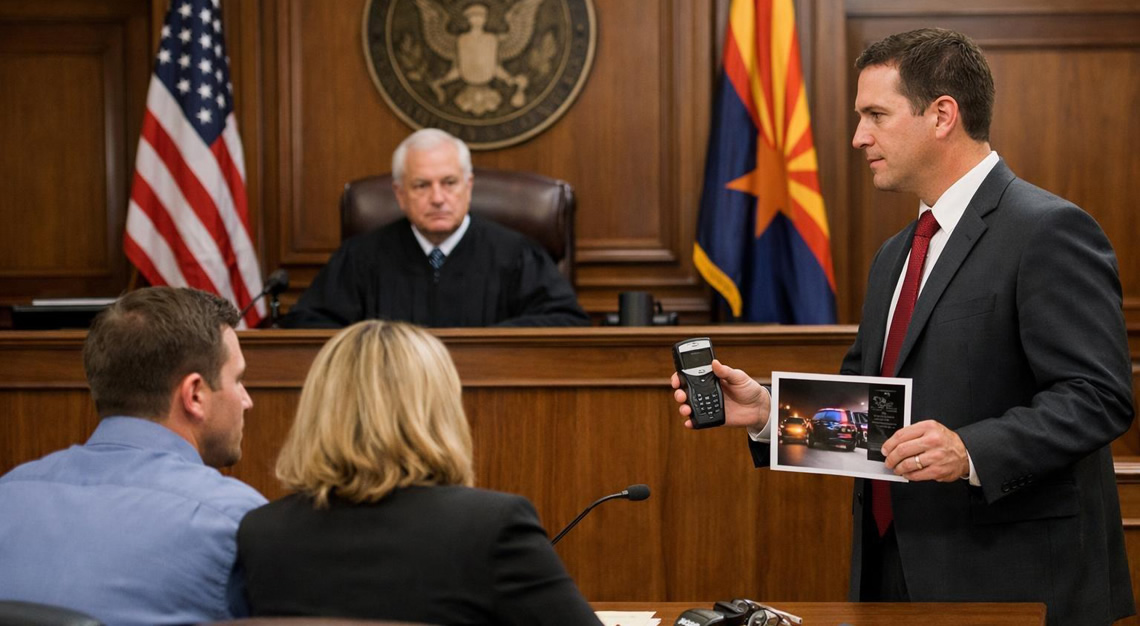
First Appearance Before the Judge
You will need to attend your first court appearance within 30 days of your arrest. This hearing is when the court formally presents the charges against you. At this time, you must enter a plea of guilty, not guilty, or no contest.
Your arrest records will be part of the case file the court reviews. If your case involves serious factors or additional charges, you might need to see a judge sooner to discuss bail and any conditions for your release.
Pre-Trial Court Hearings
Both sides can file legal requests before your trial starts. Your lawyer might challenge how evidence was collected or ask the court to throw out certain statements. Common challenges include questioning whether the police had valid reasons to pull you over or whether breath test equipment worked correctly.
You will likely attend several hearings where the judge rules on these requests. The court decides which evidence can be used at trial during these sessions.
Arizona arrest records become important during this phase as prosecutors build their case. Your attorney may also review these records to find problems with how your arrest was handled.
What Happens at Trial
Most DUI cases end before reaching trial through plea deals or dismissed charges. If your case goes to trial, the state must prove you committed the offense beyond a reasonable doubt. The trial includes evidence presentations, witness statements, and questioning from both sides.
Possible trial results include:
- All charges dropped
- Not guilty verdict
- Guilty verdict
A conviction can lead to different penalties based on the specifics of your case and your prior record. These may include fines, required classes, probation time, or jail sentences. The exact outcome depends on factors like your history and the circumstances of your arrest.
Possible Penalties for DUI in Arizona

A DUI conviction in Arizona is classified as a class 1 misdemeanor. If you are found guilty, you could face jail time between 30 days and 6 months. You may also need to pay fines up to $2,500.
Your penalties can extend beyond jail and money. You might need to check in with a probation officer on a regular basis. Courts often require people to complete alcohol education classes or treatment programs for substance use.
Community service and restitution work are common requirements. Your driving privileges will likely face long-term limits. You may need to install an ignition interlock device in your vehicle that requires you to pass a breath test before your car will start.
Public records of your arrest, including mugshots, may become available. Working with a qualified criminal defense attorney can help you pursue the fairest possible outcome in your case.
Aggravating Factors and Enhanced Penalties

Certain circumstances can increase the severity of penalties you face for a DUI conviction. Your blood alcohol content plays a role in determining punishment. When your BAC reaches 0.15 or above, you may receive longer jail sentences and higher fines than someone charged with a standard first offense.
Several specific situations can lead to harsher consequences:
- Having passengers under 18 years old in your vehicle
- Getting arrested for DUI multiple times
- Causing serious bodily harm to another person
- Taking someone's life in a crash
Your penalties depend on the facts of your case. Two people recently booked for DUI may face very different outcomes based on these factors. Someone driving with a high BAC and children in the car will receive more severe punishment than someone charged with a basic first-time offense.
Common Defense Strategies for DUI Charges
Every DUI case has unique details that may affect how you build your defense. Your attorney will review the facts and public records related to your arrest to find the best approach.
One strategy questions whether the traffic stop was legal. Officers need reasonable suspicion to pull you over. If they lacked proper grounds, the evidence gathered might be challenged.
Another approach examines the reliability of field sobriety tests. These tests depend on officer judgment and can be affected by factors like road conditions or physical limitations you may have.
Breathalyzer accuracy is also frequently disputed. The devices must be maintained and operated correctly. Errors in calibration or improper use can produce wrong readings.
Some defenses focus on medical explanations. Certain health conditions or medications can create results that look like intoxication but aren't. Documentation from your doctor can support this argument.
Your attorney may also look at whether proper procedures were followed. If your rights were violated during the arrest or testing, that could strengthen your case.
Finally, behaviors officers viewed as impairment signs might have other explanations. Nervousness, tiredness, or stress can mimic intoxication symptoms.
Work with your lawyer to determine which strategies fit your situation based on the specific circumstances of your arrest.
Why Legal Representation Matters
Getting skilled legal help for a DUI charge brings real advantages to your case. A lawyer can build a solid defense strategy and guide you through each step of the court process. They know how to file the right paperwork and get you ready for court appearances.
The right attorney will review evidence gathered by the county sheriff's office and look for problems in how it was collected. They can spot errors in police procedures or test results that might help your case. Your lawyer can also talk to prosecutors about lowering your charges or reducing penalties.
Finding the Right Attorney for Your Case
You need to put in some work to find a good DUI lawyer. Start by reading what other clients say about them online. Ask people you trust if they know any lawyers who have handled similar cases.
Set up meetings with a few different attorneys before you decide.
During these meetings, pay attention to:
- Their past experience with DUI cases
- How well they explain things to you
- Their plan for handling your situation
- Whether you feel comfortable working with them
Pick a lawyer who has successfully defended DUI clients before. They should answer your questions clearly and make you feel confident about your defense.
Get Experienced DUI Representation With Phoenix Criminal Lawyer Law
When police stop you for suspected drunk driving, they typically ask you to take field sobriety tests or breath tests. Refusing these tests often leads to arrest. You may face mandatory chemical testing at the station or automatic penalties like losing your license, even before any conviction.
The DUI arrest process involves multiple steps. You'll go through pre-trial motions and several court appearances. Having skilled legal counsel makes a significant difference in building your defense strategy.
Phoenix Criminal Lawyer Law offers proven criminal defense services for DUI cases throughout the Phoenix area. Our legal team knows Arizona's DUI laws and court procedures inside and out. We work to get you the best possible result for your case.
Your attorney can challenge different parts of your arrest. They might question whether the officer had valid reasons to stop you. They can examine if the tests were done correctly. They can look for mistakes in how evidence was collected.
Our lawyers provide complete legal support from arrest through trial. We handle all court filings and represent you at every hearing. You get personalized attention for your specific situation.
Reach out to the criminal defense team at (602) 600-0447 to discuss your case. You can get legal advice that fits your specific circumstances and learn what steps to take next.


