
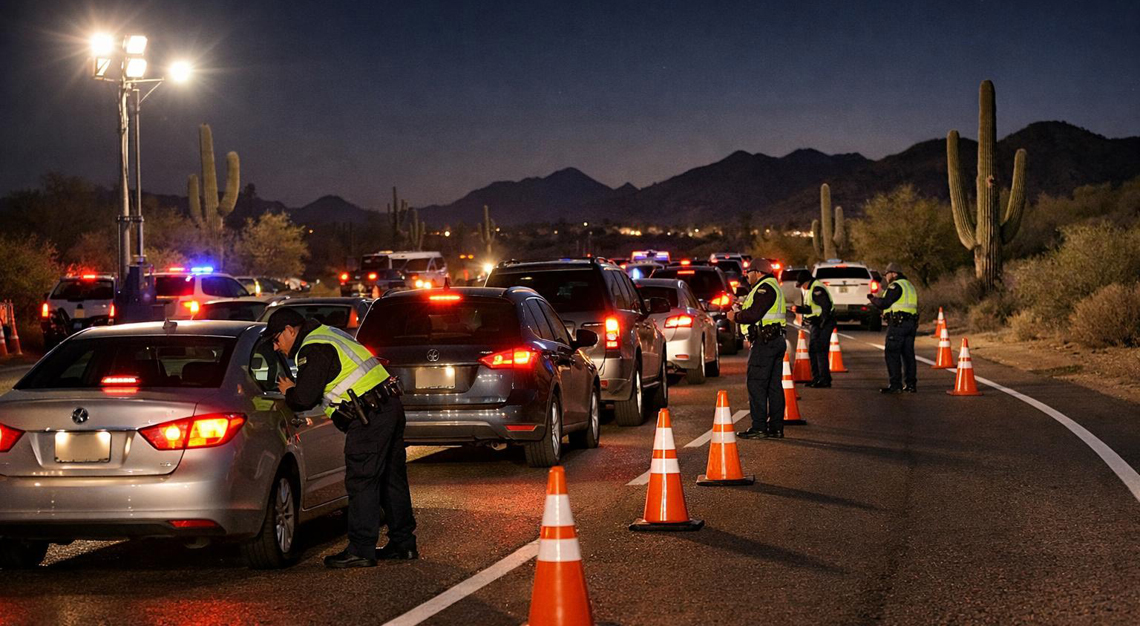
How do DUI Checkpoints Work in Arizona? What Drivers Need to Know
Are DUI Checkpoints Legal in Arizona?
Arizona law allows police to set up DUI checkpoints throughout the state. These roadblocks are used in 38 states across the country. Some states have banned them due to Fourth Amendment concerns, but Arizona is not one of them.
You will typically encounter these checkpoints during late night and early morning hours. They happen most often on Fridays, Saturdays, and holidays. Police set them up during times when impaired driving is more common.
Common checkpoint characteristics:
- Temporary roadblocks on public roads
- Officers stop vehicles to check for signs of impairment
- Often scheduled during high-risk times
- May occur monthly or more frequently
The checkpoints must follow strict legal guidelines to remain valid. You still maintain your constitutional rights when you pass through one. Law enforcement cannot conduct these stops however they choose.
How Arizona DUI Checkpoints Work
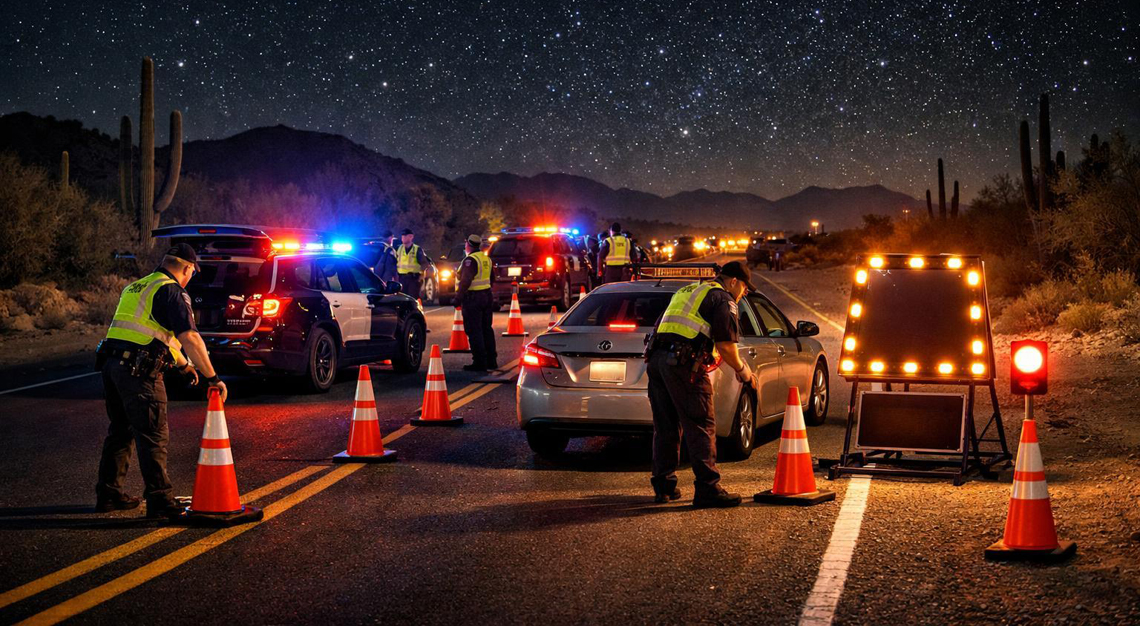
Police set up sobriety checkpoints at specific locations to identify drivers who may be impaired. Officers often choose spots near bars, restaurants, concert venues, or sporting events where alcohol consumption is common. However, Arizona DUI checkpoints can appear on any public road.
Law enforcement must announce checkpoint locations beforehand through newspapers or local news channels. The checkpoints need visible signs so drivers know what to expect as they approach.
At the checkpoint, officers use one of two stopping methods:
- Stop every vehicle that passes through
- Stop vehicles in a predetermined pattern, such as every third or fifth car
When you reach the checkpoint, officers look for signs that you might be intoxicated. They will ask you questions and watch how you respond. Officers pay attention to your speech, movements, and overall behavior.
If an officer notices anything that suggests impairment, they may request that you complete field sobriety tests. This additional screening helps them determine whether you are driving under the influence.
Common Field Sobriety Tests in Arizona
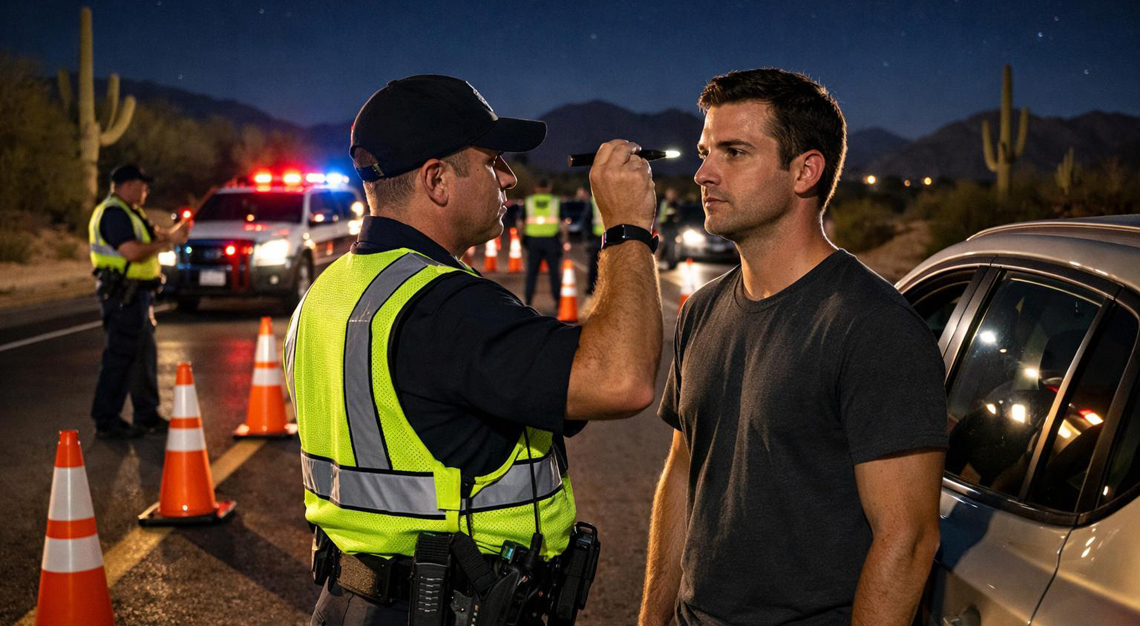
When police officers suspect a driver of being under the influence, they use specific tests to check for signs of impairment. These evaluations look at how well you can perform physical tasks and follow instructions. Each test checks different abilities that alcohol or drugs might affect.
Arizona law enforcement typically uses three main tests:
Horizontal Gaze Nystagmus (HGN) checks your eye movements. An officer holds an object like a pen or flashlight and moves it from side to side. You follow the object with your eyes while keeping your head still. Officers look for involuntary eye movements that can indicate impairment.
Walk and Turn tests your balance and ability to follow directions. You walk heel-to-toe along a straight line for nine steps, turn around on one foot, and walk back the same way. Officers watch for stumbling, stepping off the line, or using your arms for balance.
One-Leg Stand measures your physical stability. You lift one foot about six inches off the ground and count out loud for 30 seconds. Officers note if you sway, hop, put your foot down, or use your arms to stay balanced.
Officers document your performance on these tests and can present their observations as evidence in court.
How Reliable Are Field Sobriety Tests?
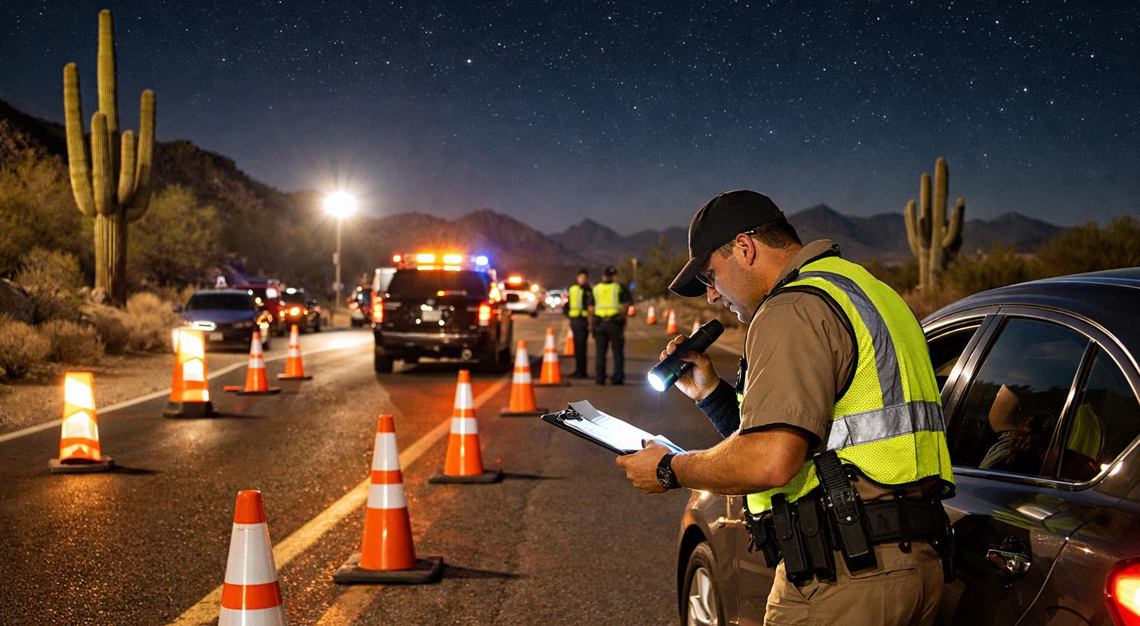
Field sobriety tests often fail to accurately measure whether you have been drinking. These tests rely heavily on subjective observations by officers rather than objective measurements of your blood alcohol concentration. Even people who are completely sober sometimes fail these evaluations.
Your physical condition plays a major role in test performance. Some people lack the natural coordination to balance on one leg for extended periods. Age, physical disabilities, and certain medications can affect your ability to complete these tasks successfully. These factors have nothing to do with your BAC level.
External conditions also impact test results. Poor weather, dim lighting, and uneven road surfaces make it harder to perform these tests correctly. Field sobriety tests differ from breathalyzers, which provide chemical analysis of your blood alcohol concentration.
Research from the National Highway Traffic Safety Administration shows significant accuracy problems:
- Horizontal Gaze Nystagmus (HGN): 77% accurate
- Walk-and-Turn: 68% accurate
- One-Leg Stand: 65% accurate
None of these tests come close to perfect accuracy. The subjective nature of field sobriety evaluations means they can be challenged in court. You have legal rights during traffic stops that can protect you from unreliable testing methods. Understanding these limitations helps you make informed decisions when stopped at checkpoints or during regular traffic stops.
Your Rights at DUI Checkpoints
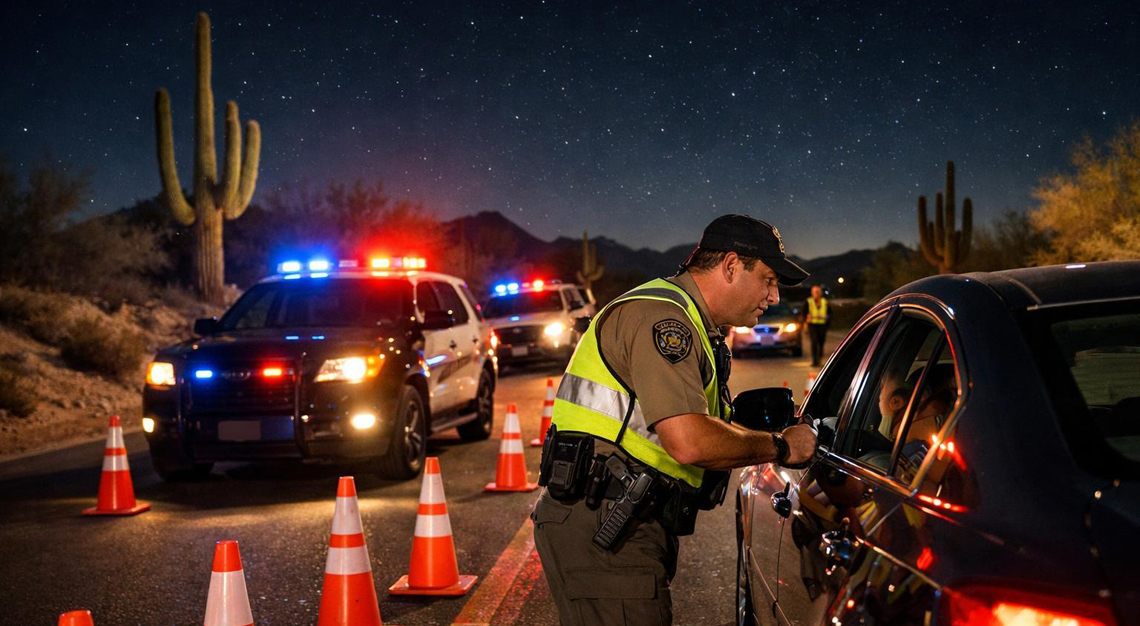
When stopped at a checkpoint, you retain several important protections. You don't have to agree to field sobriety tests, including breathalyzer or blood tests. Officers may pressure you or suggest that taking these tests helps your situation, but you can decline them without breaking the law.
What You Must Provide
Arizona law requires you to give officers only specific information:
- Your full name
- Driver's license
- Vehicle registration
- Proof of insurance
Beyond these items, you aren't obligated to share additional details or answer every question asked.
The Right to Remain Silent
Officers often ask questions like "Have you been drinking tonight?" or "Where are you coming from?" Anything you say becomes part of the record and can work against you later in court. If you admit to consuming even one or two drinks, this statement can support an impairment case.
You can politely decline to answer questions beyond basic identification. A simple response such as "I prefer not to answer questions" works well. Keep your tone respectful and calm during the entire stop.
Commands You Must Follow
While you have rights at DUI checkpoints, certain instructions aren't optional. If an officer tells you to exit your vehicle, you must comply. Refusing this request can result in additional charges. Follow all lawful orders from law enforcement to avoid complications.
Protecting Yourself
Declining a sobriety test isn't an admission of wrongdoing. However, the interaction requires careful handling. Stay polite, provide required documents promptly, and avoid volunteering information. Constitutional violations at checkpoints can affect your case, so contact an attorney quickly after your stop.
Can You Refuse a DUI Test in Arizona?
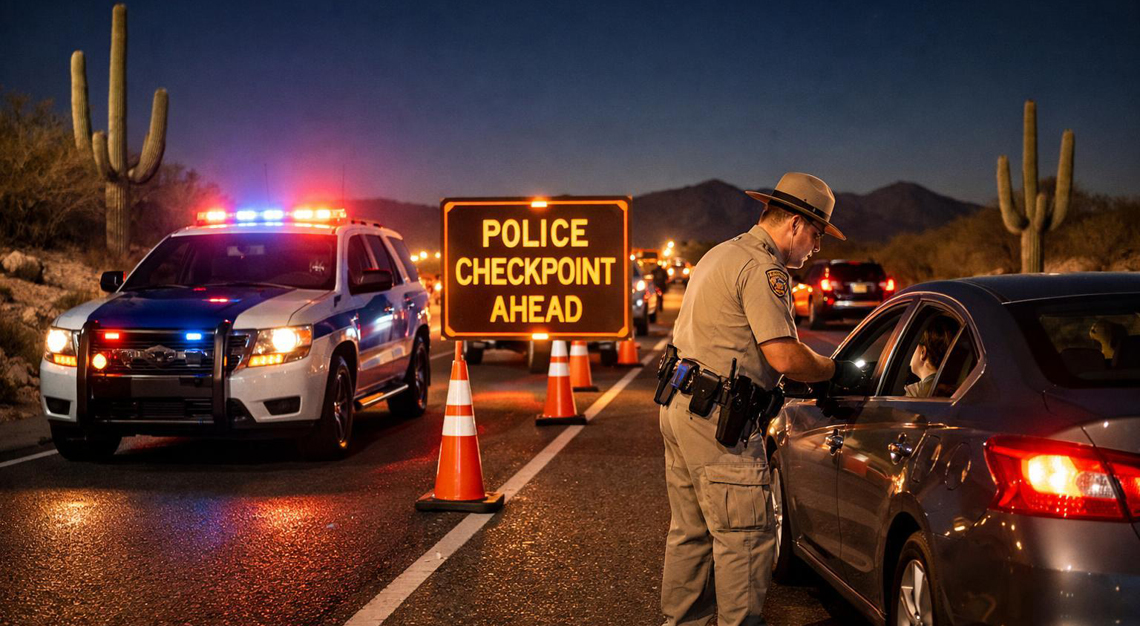
You can refuse field sobriety tests at a DUI checkpoint in Arizona. These roadside tests include balance checks and eye movement evaluations. Officers cannot legally force you to complete them.
However, refusing these tests comes with risks. An officer may arrest you based on suspicion of drinking and driving. They can take you to the police station for additional testing. The prosecution may later use your refusal against you in court to suggest you feared failing the test.
After refusing field sobriety tests, officers typically request a breath test. The portable breath test used at roadside stops measures alcohol in your system. These handheld devices are less reliable than station-based equipment. You may want to wait for testing at the police station where more accurate methods are available.
Chemical testing includes breath, blood test, and urine analysis. These tests provide more accurate results than roadside sobriety checks.
You can decline chemical testing, but Arizona's implied consent law creates serious penalties. Refusing a chemical test triggers an automatic license suspension for at least 12 months. This happens even if you are never convicted of DUI.
Officers often obtain a search warrant when you refuse chemical testing. This warrant requires you to submit to testing anyway. The warrant eliminates your option to refuse.
Chemical test refusal is generally not recommended due to the guaranteed license suspension and high chance of forced testing through a warrant.
Finding Legal Support Following a Checkpoint Arrest

If you face Arizona DUI charges after a checkpoint arrest, you need to act quickly. A DUI defense attorney can review your case and look for ways to reduce your charges or penalties.
Working with an experienced legal team helps you understand the process and your options. They can examine if the checkpoint followed proper procedures and build a defense strategy.
What a DUI attorney can do for you:
- Review the details of your checkpoint stop
- Challenge improper procedures or violations of your rights
- Negotiate with prosecutors to reduce charges
- Represent you in court proceedings
- Guide you through administrative license hearings
Legal help gives you the best chance at protecting your future after a DUI checkpoint arrest.
Criminal charges affect your future in serious ways. Getting help from a lawyer who knows Arizona law makes a real difference in how your case moves forward.
Our lawyers provide complete legal support from arrest through trial. We handle all court filings and represent you at every hearing. You get personalized attention for your specific situation.
Reach out to the criminal defense team at (602) 600-0447 to discuss your case. You can get legal advice that fits your specific circumstances and learn what steps to take next.


